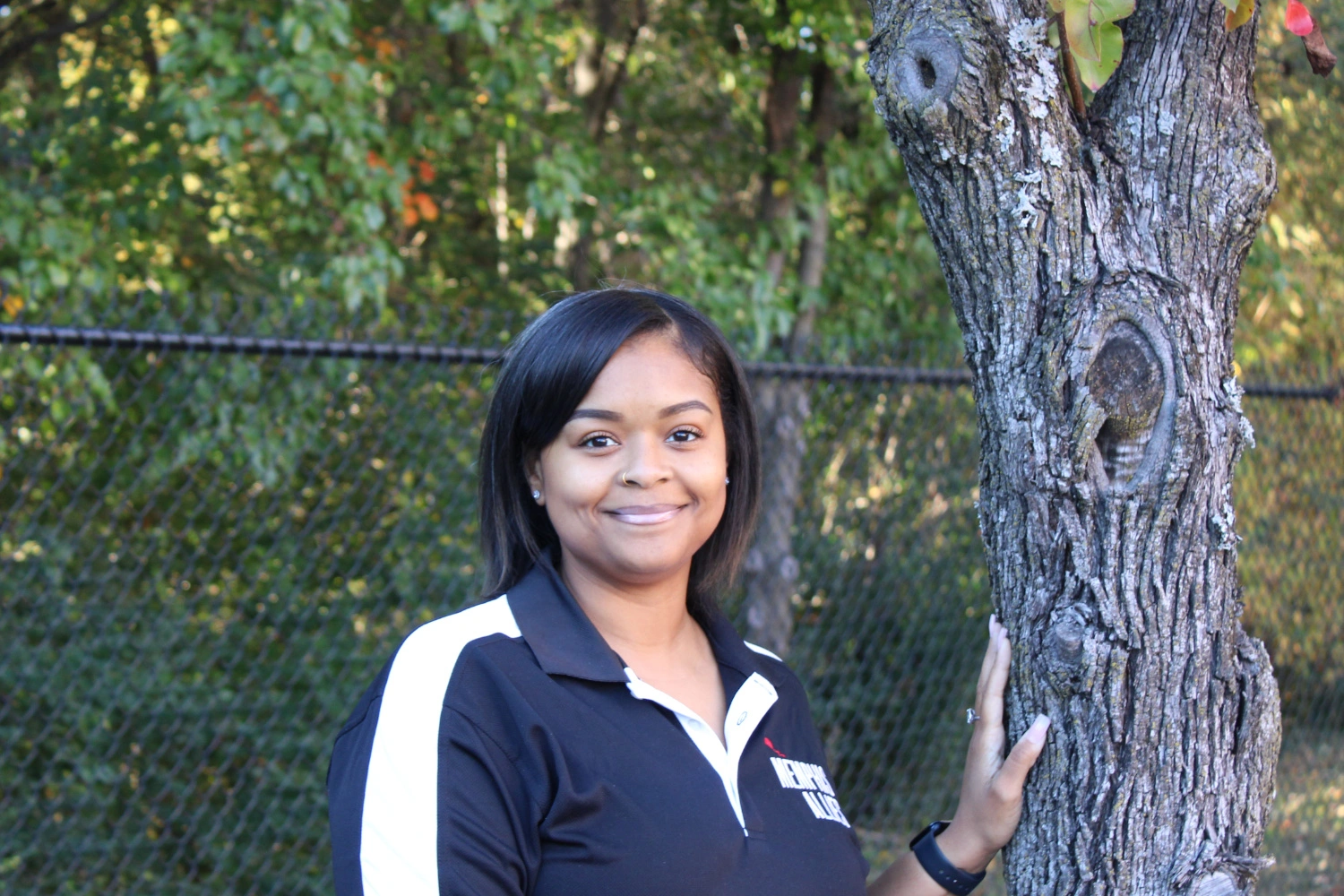
TaMara Reed: Helping participants see futures they did not imagine
In 2026, it seems unbelievable that young people could grow up in Memphis and never step foot outside of their own ZIP code.
But TaMara Reed, a SWITCH Youth clinical supervisor, has seen the wonder in a teenager’s eyes when traveling from one ZIP code to another; it is almost like visiting a foreign land.
“We took a 16- or 17-year-old to Shelby Farms for a walk, and he thought we had left Memphis,” she said. “He had never been out of his neighborhood. It’s telling.”
The story being told: Your world is a small, even captive, place when it is filled with gun violence; all you know is geography is turf, and stepping on the wrong turf could give you a permanent time stamp.
“I’ve had kids tell me they’re not afraid to die,” Reed said. “They know it’s going to happen regardless. They know they’re going to die before they hit 18.”
‘Relentless’
Most SWITCH Youth participants are gang affiliated, and 86% have at least one weapons charge at the time they enroll in programming. In addition, they bring a backpack full of other challenges:
- 74% have behavioral issues
- 64% have suffered abuse/neglect
- 51% have educational issues
- 32% have physical health needs; 30% have emotional/mental health needs
Beyond that, Reed said: “Poverty is huge. Undiagnosed mental health problems. Single-parent household, no dad in the picture, or being raised by grandparents or an aunt. They’ve raised their kids already and they just want to be grandparents. They don’t know about social media, and they’re at their capacity to cope.”
Which is where SWITCH Youth staff—outreach specialists, life coaches, case managers and clinical specialists—enter the picture. They work together to help the participant steer clear of gun violence and make progress in their lives. That can mean, among other things, returning to school or getting a GED, finding a job, and working with a clinical therapist on unresolved trauma and better decision-making skills.
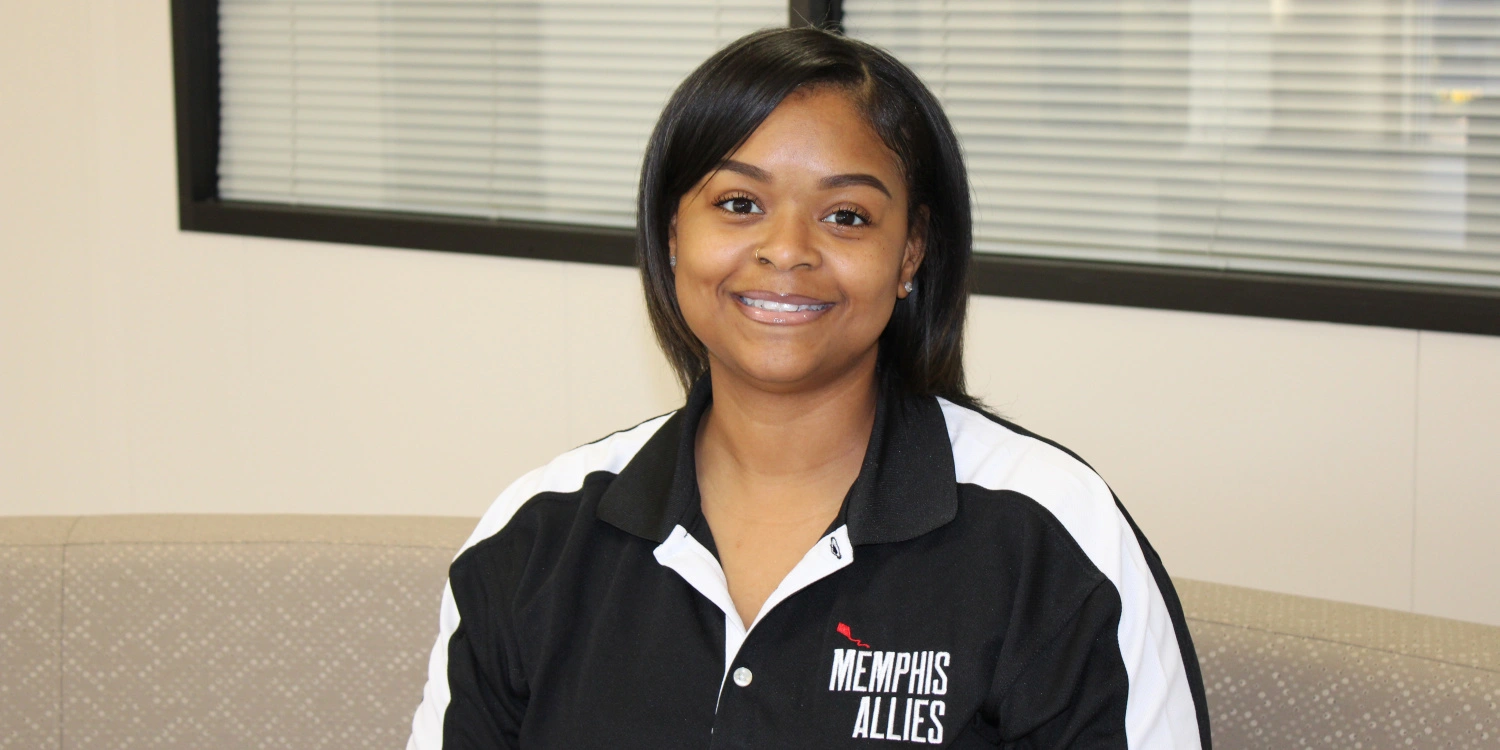
Reed, 32, did not grow up in gang life, but living in the so-called projects for part of her childhood she knew the sound of a gunshot as “normal.” At least until she moved to a different neighborhood and one day realized that sound was gone.
She said the safety of participants must always come first.
If we can lessen the time they’re just hanging out and put it toward school, going to a job, we can start working on a mindset shift.
— Tamara Reed
Memphis Allies, SWITCH Youth clinical supervisor
“The first step is I lean on my life coach, make sure we understand what’s going on with [participants’] peers, check their social media and find out who they’re hanging out with,” Reed said. “If we can lessen the time they’re just hanging out and put it toward school, going to a job, we can start working on a mindset shift.”
Promoted from the position of clinical specialist to clinical supervisor, Reed often still leaves the office and goes into the field to make sure participants are getting everything they need.
“She’s got a passion; she’s very hands-on,” said Brittney Ragin, director of clinical programs at Memphis Allies. “We talk a lot about how outreach is relentless, but in her clinical role she has that same level of relentlessness. She’s always trying find out what the drivers are for attitudes and behaviors.”
Professional and personable
Just as Reed once considered it normal to frequently hear gunshots, many SWITCH Youth participants might find it difficult to imagine a serene world where they can walk around a lake, a duck occasionally floating past.
“It’s hard for them to conceptualize outside of what they see day-to-day,” said Reed, who received her Master of Social Work from the University of Tennessee-Knoxville. “They don’t talk about five years down the line. It’s day-to-day for them.”
But SWITCH Youth can change the calculations. A recently completed study of the program by the Public Safety Institute at the University of Memphis returned encouraging findings, including that less than 8% of participants picked up a new gun charge while in programming.
As for Reed, she knows there is more future than past for SWITCH Youth participants—even if they themselves do not know it yet. This is why she tries to meet them where they are by listening to their favorite rappers and “being hip to their lingo.”
So, Reed can translate all the acronyms:
IDM: It doesn’t matter.
WYGG: What you got going?
IJS: I’m just saying
It is all part of connecting and making a daily impact.
“She’s got the clinical skills,” Ragin said, “and the relational skills.”