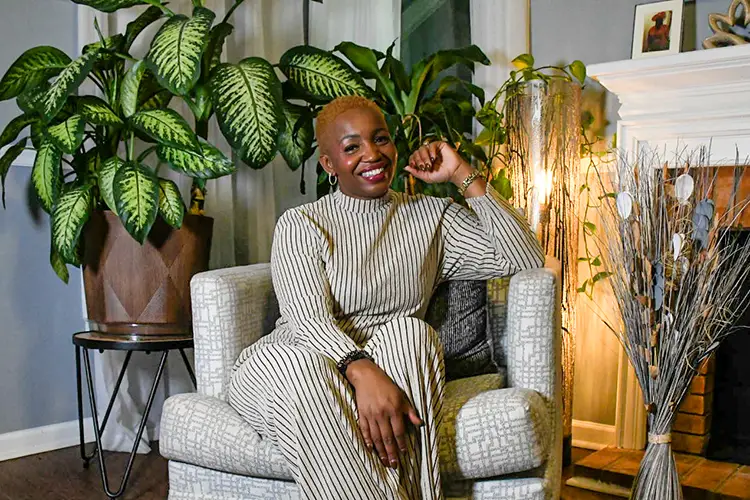
Kinah Burks, founder of Leading in Life Enterprise (LLE), a Memphis Allies partner, understands this truth.
“Healthy people make healthy decisions and healthy communities,” Burks said, adding that she advocates what she calls “leading whole.” Simply stated: people who have experienced trauma can strengthen their personal leadership by recognizing how painful experiences may continue to influence them; and by engaging in the healing process, can develop healthier ways to think, respond, and make decisions.
After previously contracting with the Shelby County Corrections Department and the county office of reentry, Burks’ LLE started working with Memphis Allies in the fall of 2024.
Since then, Burks said about 100 Memphis Allies participants in Stages 3 and 4 of the SWITCH (Support with Intention to Create Hope) program have cycled through LLE.
The ongoing goal? For participants to learn self-awareness at a level that ensures greater accountability.
“The core question is, what’s happening inside me?” Burks said. “It is understanding that emotions are data and not direction. With that data, I can figure out what is valid and what is true. Leading me to make the best decisions going forward.”
She understands our approach and our mission, which makes her an invaluable partner. Collaboration is essential because silos can cause us to overlook critical pieces of the process.
– Jevonte Porter
Memphis Allies, director of community relations
A success story
Memphis Allies’ mission is centered on helping people avoid rash decision-making that could contribute to violent outcomes. Susan Deason, Memphis Allies’ executive director, says that makes LLE an excellent fit as a program partner.
“It is important to remember there is always a ‘before’ that informs the decisions people make next,” Deason said. “LLE’s approach is very compatible with our work. Kinah helps people see those connection points, so their next decision can be made with reason, with a focus on future possibilities and not past conflicts.”
Jevonte Porter, Memphis Allies’ director of community relations, helped bring LLE into the fold as a partner.
“Kinah works so well with Memphis Allies staff,” Porter said. “She understands our approach and our mission, which makes her an invaluable partner. Collaboration is essential because silos can cause us to overlook critical pieces of the process.”
When working with Stage 3 participants, Burks said the emphasis is on helping participants learn to self-lead.
“By the end of Stage 3, they’re vision casting,” Burks said. “By Stage 4, we’re positioning them to use their voices, whether with an employer, entrepreneurial endeavors or in the community.”
Burks learned early on, when helping those referred by the local office of reentry, that there can be a healthy dose of skepticism. She recalled one man who had long locs and wore dark sunglasses. For weeks, he sat there and said nothing.
Then came the day the man wanted his voice to be heard: “Lady, I’m a felon that spent 14 years in prison. Ain’t nobody gonna give me a job.”
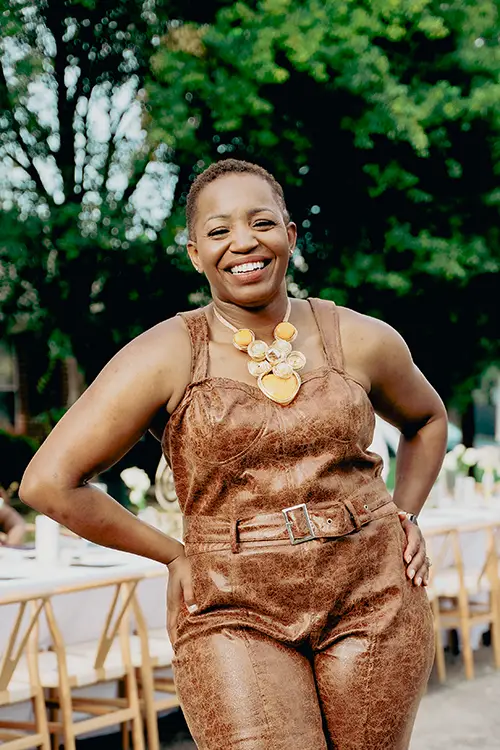
Kinah Burks, founder of Leading in Life Enterprise.
“Antonio,” she said, referring to Antonio Dowdy, one of Memphis Allies’ first, and most effective, outreach specialists.
It is a success story she never forgets and now often shares, a reminder that time offers opportunity, and that opportunity just needs time.
Change for the better
The dual powers of time and opportunity worked in Burks’ own life: her mother overcame addiction and her older brother, after spending two years in federal prison, became a dedicated family man and a professional chef.
“Without those changes, I don’t know where I would be today,” she said.
As for the Memphis Allies participants she now helps, Burks said she takes great joy in seeing them make use of traits that previously contributed to their troubles when active in a gang or clique.
“Transferable skills,” Burks said with a smile. “There’s a way to take those skills and flip them from bad to good.”